Skip to content
Roger Simmons Roger Simmons

Birds, Words, Pics + TV

  • Home
  • All Posts
    • Orlando Wetlands
    • Merritt Island National Wildlife Refuge
    • Lake Apopka Wildlife Drive
    • Joe Overstreet Road
    • UCF Arboretum
    • Fort DeSoto Park
  • My Bird Catalog
    • All Birds Catalog
    • American Flamingos
    • Bald Eagles
    • Barred Owls
    • Belted Kingfishers
    • Black-and-White Warblers
    • Eastern Bluebirds
    • Florida Scrub-Jays
    • Green Herons
    • Little Blue Herons
    • Northern Parulas
    • Ospreys
    • Reddish Egrets
    • Red-Shouldered Hawks
    • Roseate Spoonbills
    • Sandhill Cranes
    • Whooping Crane
  • Orlando TV News/History
    • Orlando TV Schedules
    • Florida TV History
  • About this Site
Roger Simmons
Roger Simmons

Birds, Words, Pics + TV

This sure isn’t SeaWorld. Watching Orcas in Alaska

Roger Simmons, August 5, 2025August 5, 2025

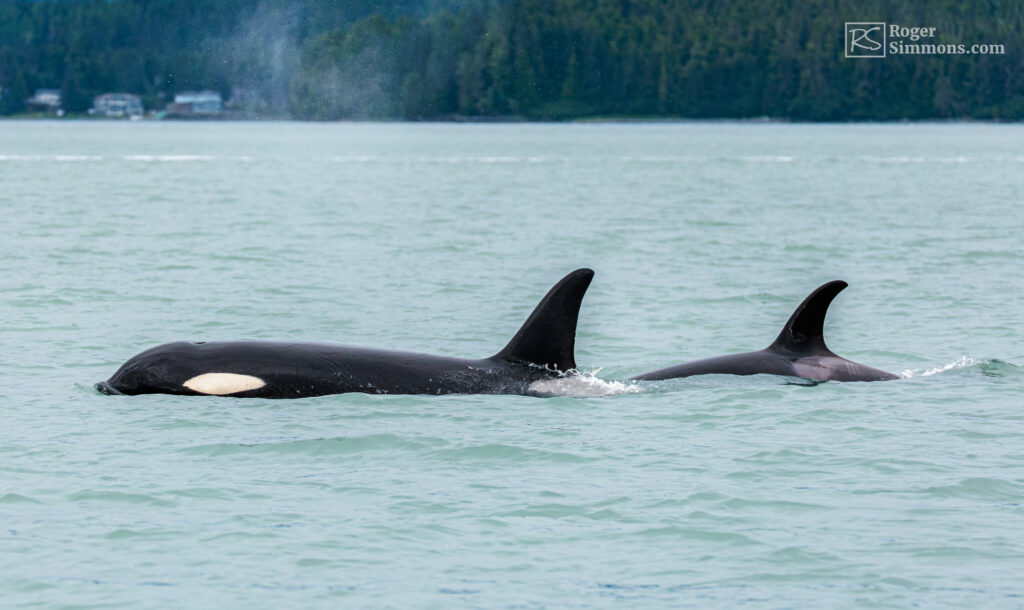
After seeing Shamu over the years at SeaWorld, I finally met some of his cousins in the wild. I just got back from a vacation in Alaska, and it included a whale watching trip in Juneau with some familiar looking whales.

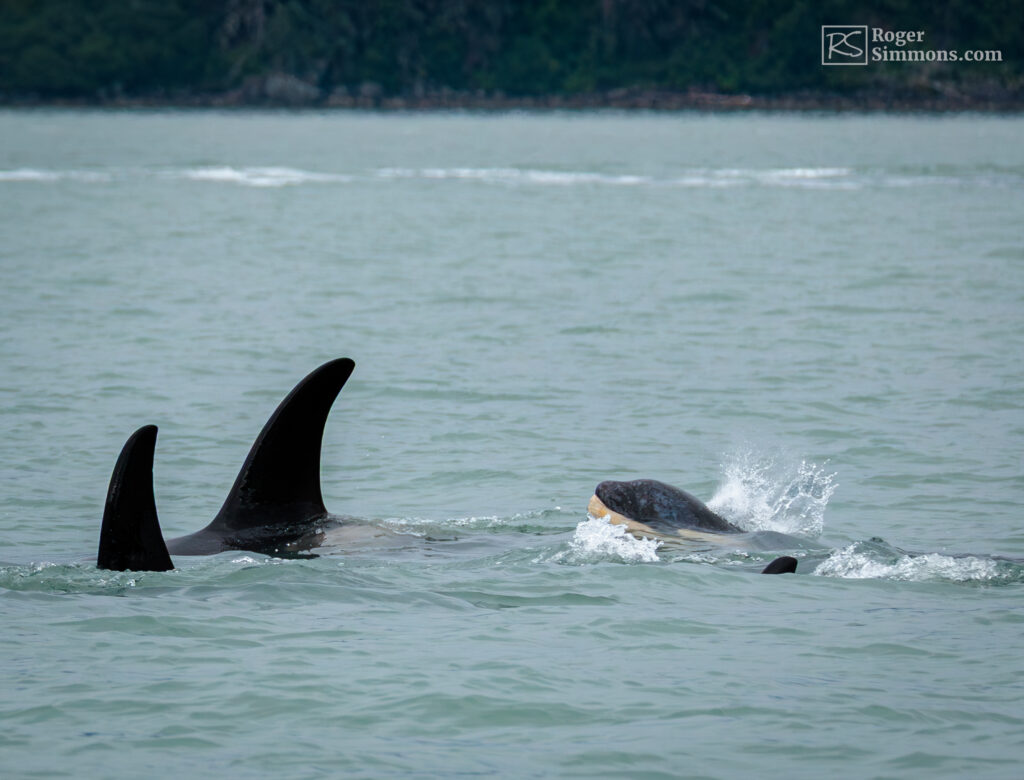
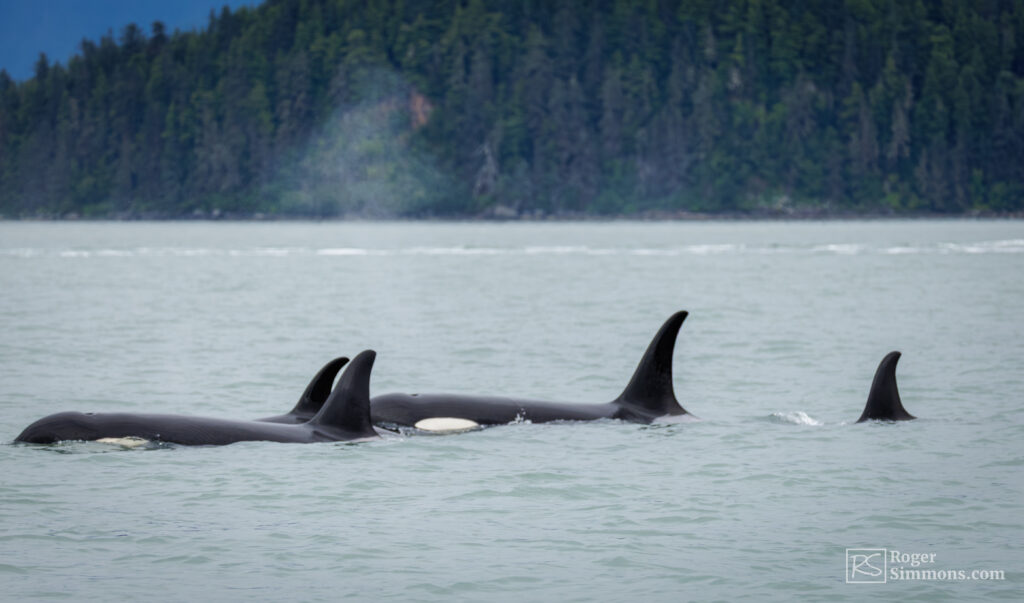
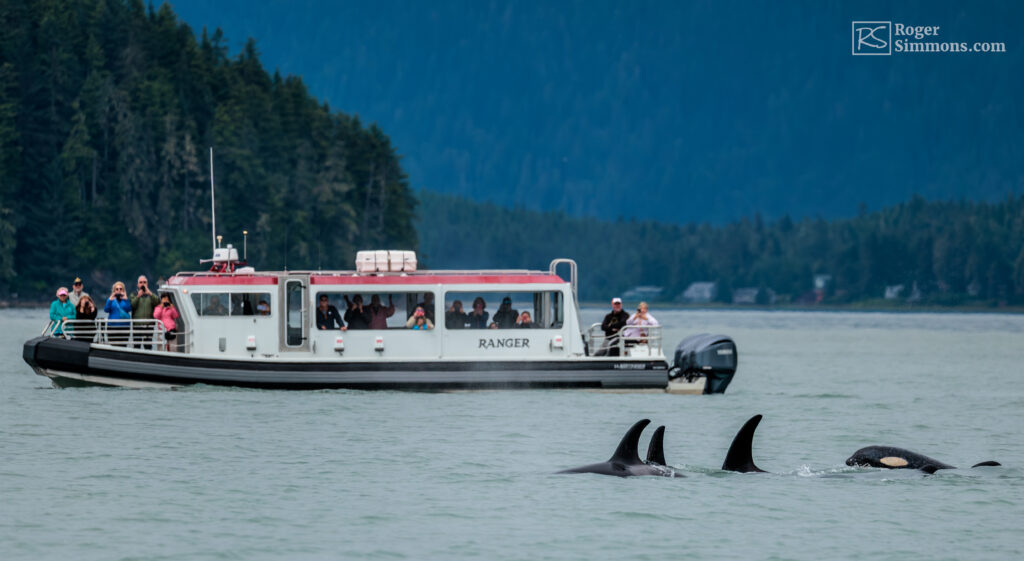
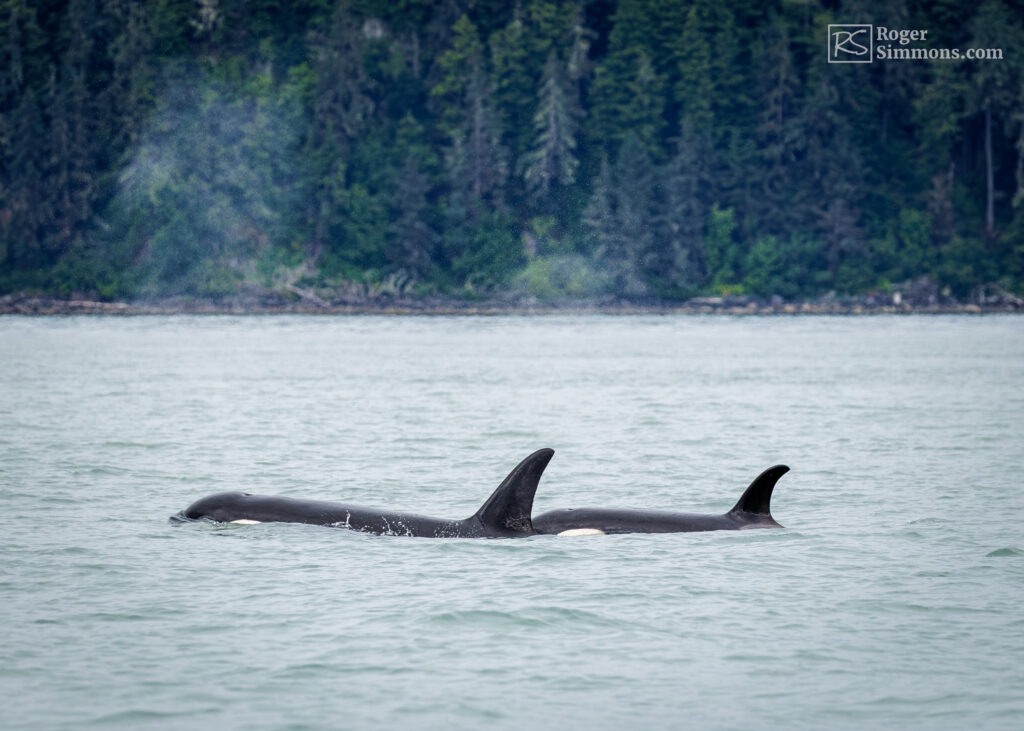
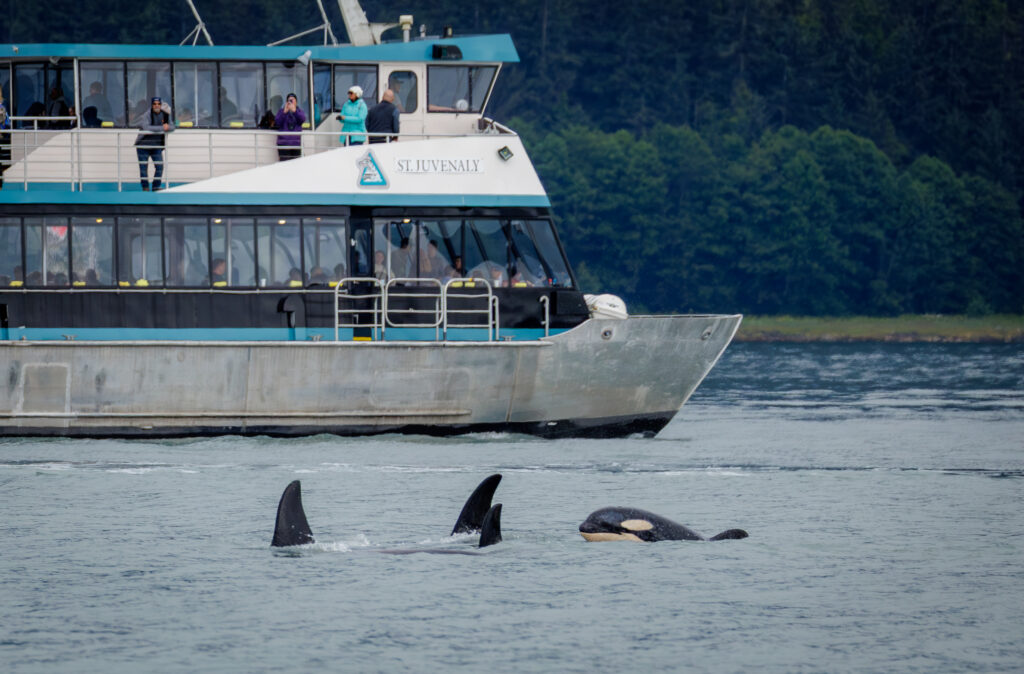
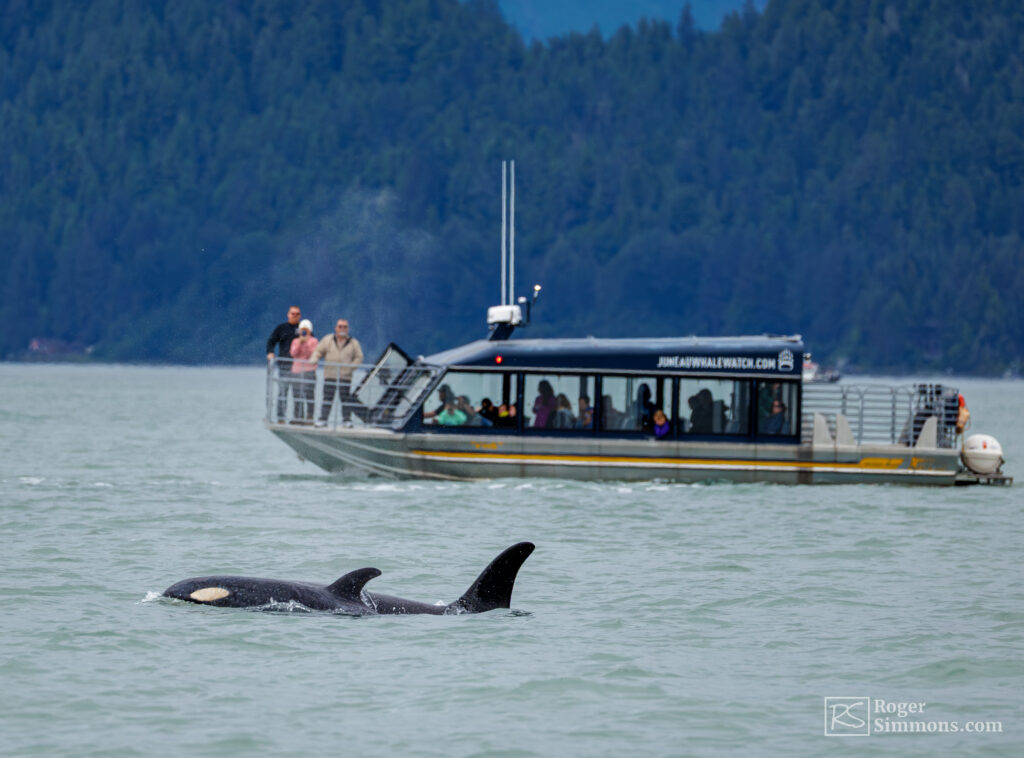
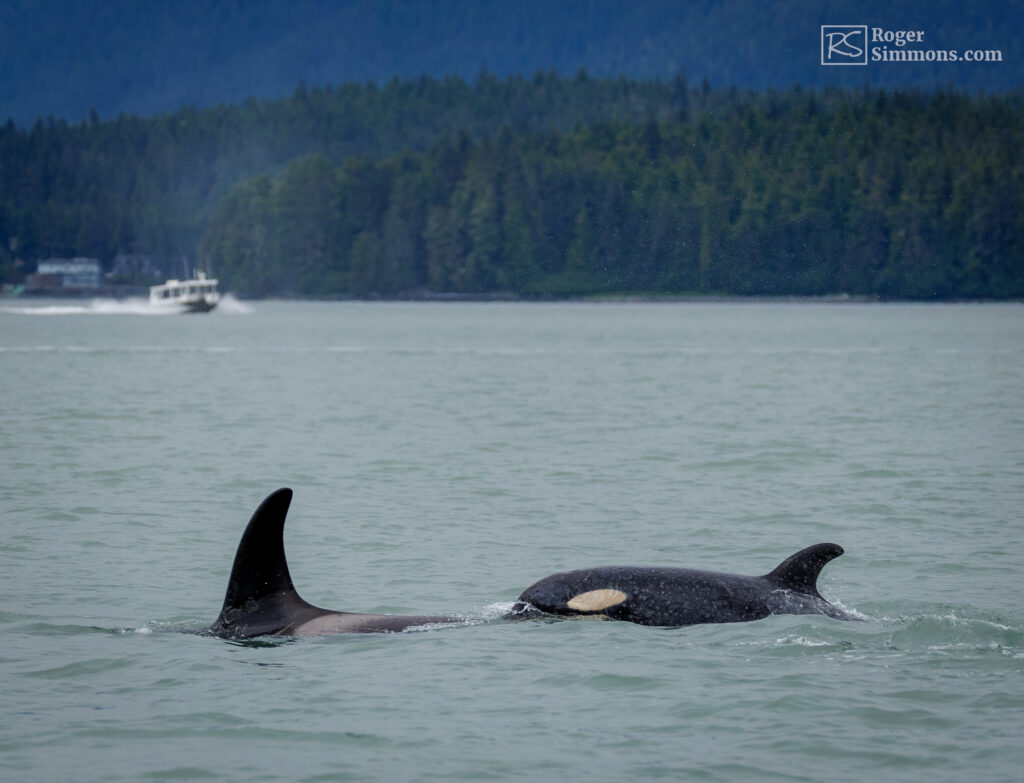
We were expecting to see Humpbacks — and we did later — but the first whales we spotted were a small pod of Orcas, or Killer Whales. There was a group of four females and one rambunctious calf.

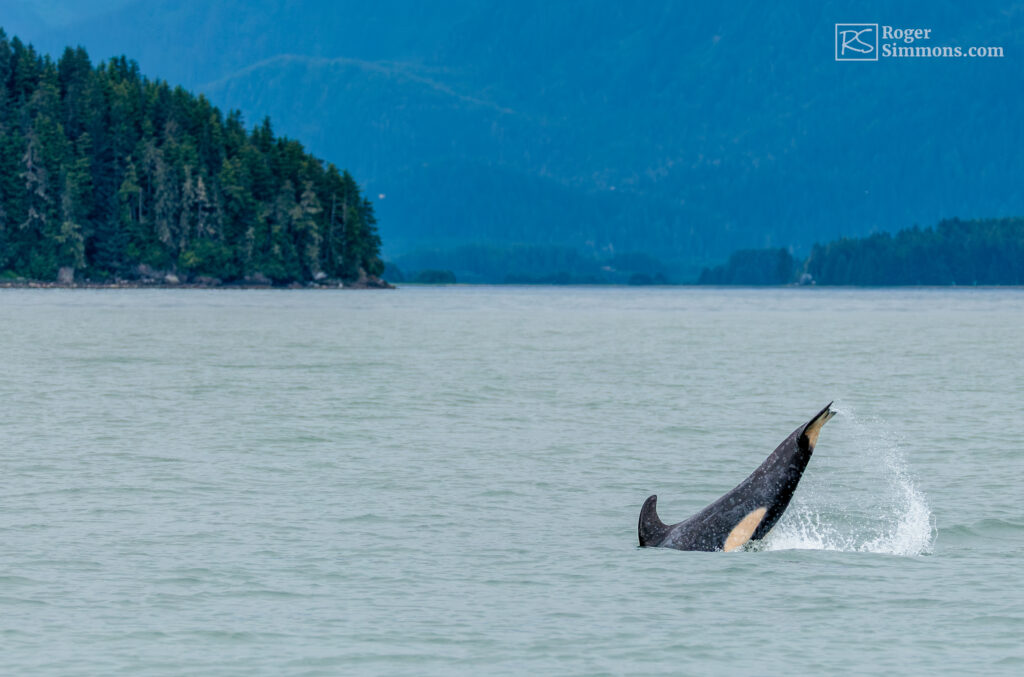
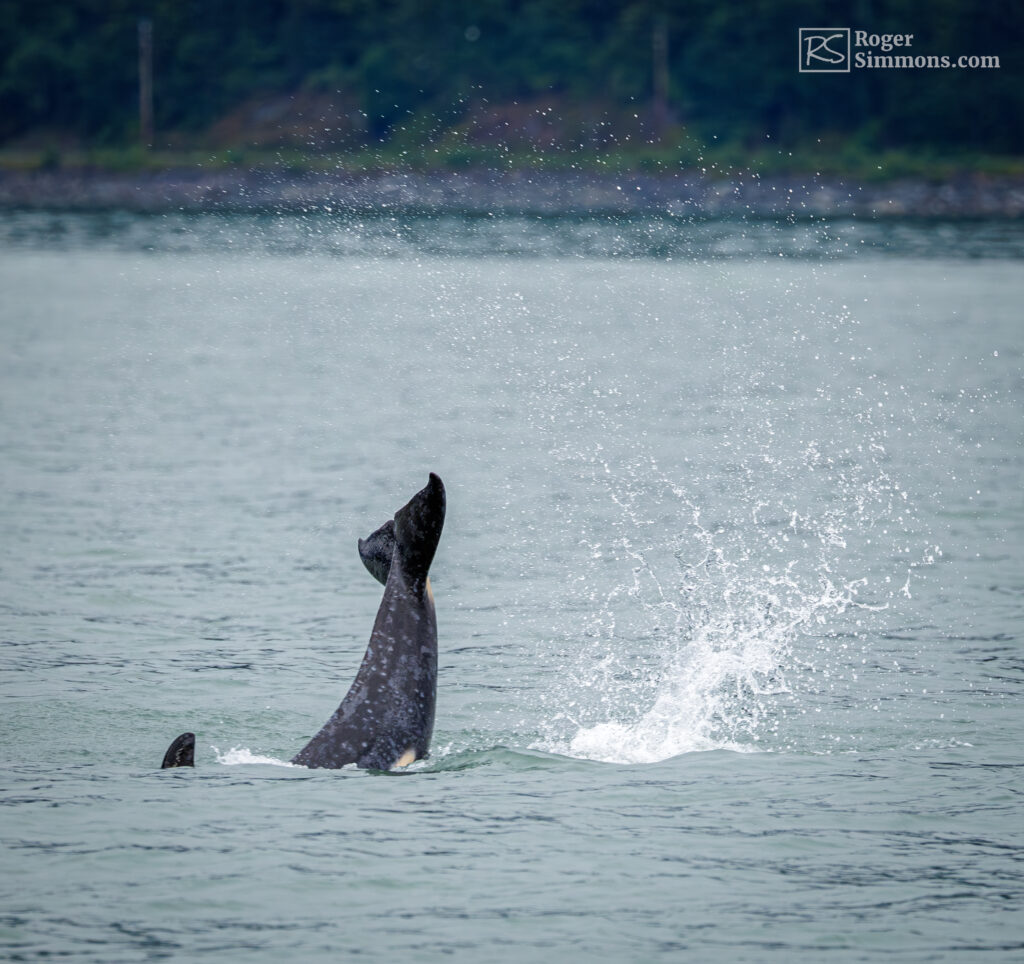
The Orcas didn’t seem to be hunting or feeding when we saw them. They appeared to be having a leisurely swim while perhaps letting junior burn off some energy. The little calf was having fun repeatedly splashing its tail in the water — which was far more entertaining than anything I’ve seen at SeaWorld.

In Alaska, there are three types of Orcas: Residents (fish-eaters), Transients (mammal-hunters) and Offshore (shark-eaters), according to the Alaska Department of Fish and Game.

The ones seen most are residents and transients. “These groups are genetically different and have distinct foraging and social behaviors and vocalizations,” the fish and game website notes. “Resident killer whales feed on fish, primarily salmon. They are very vocal and have sophisticated calls. Resident pods are more stable than transient pods. They often number more than 10 animals and can be as large as 50 animals.

“Transients feed on marine mammals, like sea lions. Because marine mammals can hear echolocation sounds and whale vocalizations, transient killer whales tend to be very quiet and usually vocalize only after making a kill. Transients live in small dynamic pods of three to seven animals.”

So did we see resident or transient Orcas? I don’t know for sure, but I know it was fun watching them.
Orcas, near Auke Bay off Juneau Alaska, July 2025.
Orcas with little calf, near Auke Bay off Juneau Alaska, July 2025.
Orcas, near Auke Bay off Juneau Alaska, July 2025.
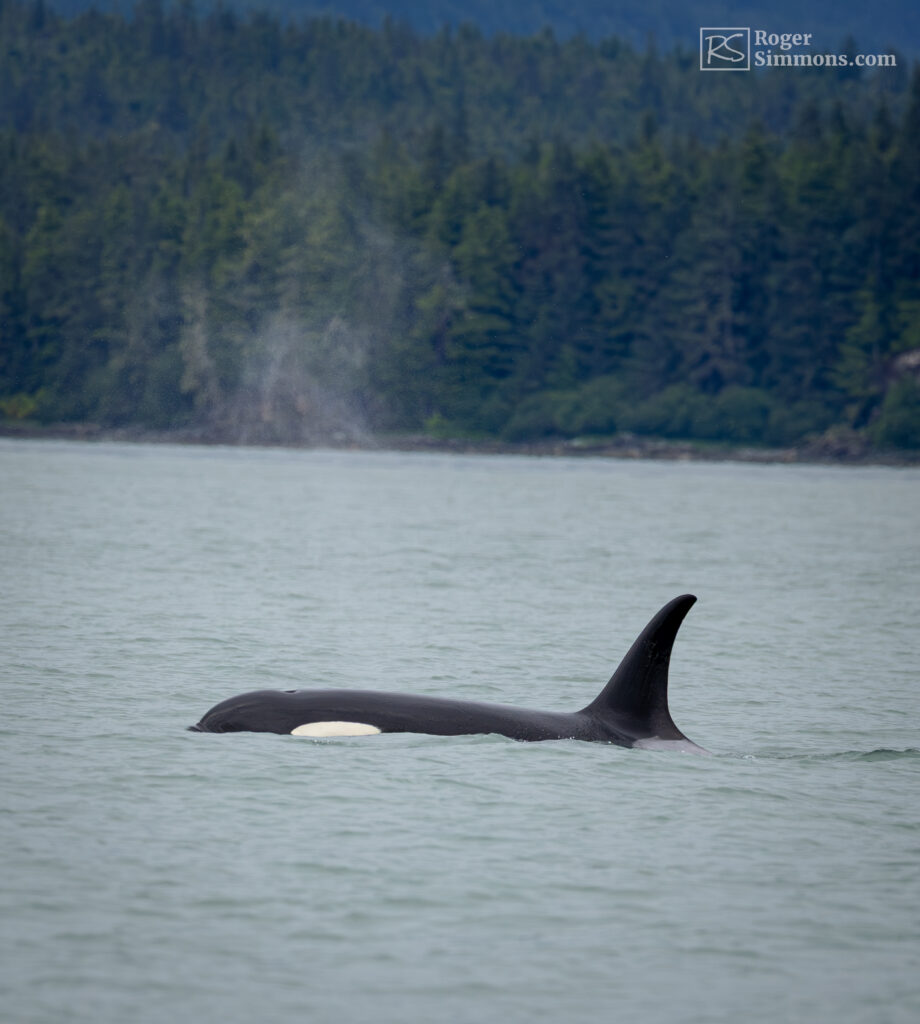
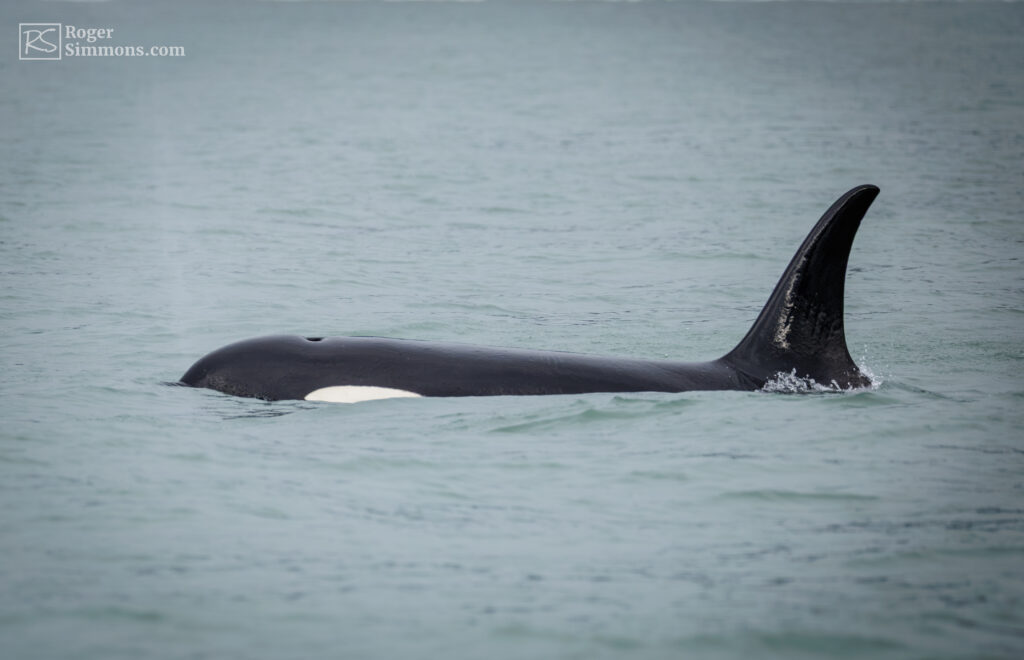
Orca, near Auke Bay off Juneau Alaska, July 2025.
Orcas, near Auke Bay off Juneau Alaska, July 2025.
Orca calf, near Auke Bay off Juneau Alaska, July 2025.
Orca, near Auke Bay off Juneau Alaska, July 2025.
Orca calf, near Auke Bay off Juneau Alaska, July 2025.
Orcas, near Auke Bay off Juneau Alaska, July 2025.
Share on Social Media
xfacebookredditemail
Alaska All Beyond Florida Not Birds Orca

Post navigation

Previous post
Next post

Related Posts

All

On the coast: Birds back after the storm

November 19, 2024November 19, 2024

It wasn’t until fairly recently that Black Point Wildlife Drive and Bio Lab Road re-opened. Some other areas still remain closed because of high water or flooding damage.

Read More
All

Spoonbills, Shovelers and more at Merritt Island

December 22, 2025December 22, 2025

Among the returning birds are pretty-in-pink Roseate Spoonbills, funny-looking Northern Shovelers and white-and-black Forster’s Terns.

Read More
All

Barn Swallows stop by on their way home

September 3, 2024September 3, 2024

I was surprised to find so many Barn Swallows along Joe Overstreet Road, but their early migration let me see just how different their appearance can be.

Read More

Latest Posts

  • More Mississippi Kites at Lake Apopka
  • Busy birding during slow summer season
  • Swallow-tailed Kites in Florida are a joy to watch
  • A few more birds from Fort DeSoto
  • Mississippi Kites make rare visit to Lake Apopka

Top Locations

Orlando Wetlands

Posts about visits to Orlando Wetlands


UCF Arboretum

Posts about visits to UCF Arboretum


Merritt Island

Posts about visits to Merritt Island National Wildlife Refuge


Lake Apopka

Posts about visits to Lake Apopka Wildlife Drive


Fort DeSoto

Posts about visits to Fort DeSoto Park


Galleries

Roger's Favorites

An ever-changing collection of my favorite pictures


American Flamingos

Photos of American Flamingos in Indian River


Belted Kingfishers

Photos of Belted Kingfishers across Central Florida.


Oystercatchers

Pictures of American Oystercatchers at Fort DeSoto Park


Spoonbills

Pictures of Roseate Spoonbills in Central Florida


Whooping Crane

Pictures of one of the last Whooping Cranes in Florida


MORE GALLERIES


Topics

American Flamingo American Kestrel Anhinga Bald Eagles Barn Swallow Belted Kingfisher Black-and-White Warbler Black-Crowned Night-Heron Blue-gray Gnatcatcher Caspian Tern Common Gallinule Common Yellowthroat Digital TV Eastern Bluebird Great Blue Heron Great Egret Green Heron Limpkin Little Blue Heron Northern Cardinal Northern Parula Orlando Wetlands Park Osprey Palm Warbler Prairie Warbler Purple Gallinule Red-bellied Woodpecker Red-shouldered Hawk Red-winged Blackbird Reddish Egret Roseate Spoonbill Sandhill Crane Savannah Sparrow Snail Kite Snowy Egret Tricolored Heron WESH-2 WFTV-9 White Ibis WKCF-18 WKMG-6 WOFL-35 Wood Stork WRDQ-27 Yellow-rumped Warbler

©2025 Roger Simmons | All Rights Reserved