Skip to content
Roger Simmons Roger Simmons

Birds, Words, Pics + TV

  • Home
  • All Posts
    • Orlando Wetlands
    • Merritt Island National Wildlife Refuge
    • Lake Apopka Wildlife Drive
    • Joe Overstreet Road
    • UCF Arboretum
    • Fort DeSoto Park
  • My Bird Catalog
    • All Birds Catalog
    • American Flamingos
    • Bald Eagles
    • Barred Owls
    • Belted Kingfishers
    • Black-and-White Warblers
    • Eastern Bluebirds
    • Florida Scrub-Jays
    • Green Herons
    • Little Blue Herons
    • Northern Parulas
    • Ospreys
    • Reddish Egrets
    • Red-Shouldered Hawks
    • Roseate Spoonbills
    • Sandhill Cranes
    • Whooping Crane
  • Orlando TV News/History
    • Orlando TV Schedules
    • Florida TV History
  • About this Site
Roger Simmons
Roger Simmons

Birds, Words, Pics + TV

Cedar Waxwings: When 50-plus birds drop by

Roger Simmons, March 16, 2023August 11, 2023

I had quite a surprise this evening when I happened to look up in the still-bare Winged Elm tree in our front yard and noticed a flock of Cedar Waxwings was visiting.

I stopped counting when I got to 50, and there were still a few more birds scattered throughout the tree. They appeared to be resting – they weren’t eating or singing. But these birds are known to migrate from as far as Canada. Maybe they are getting ready to head home?

Some of the 50-plus Cedar Waxwings that dropped by my front yard this evening.

According to AllAboutBirds.com, “Cedar Waxwings are social birds that you’re likely to see in flocks year-round. They sit in fruiting trees swallowing berries whole, or pluck them in mid-air with a brief fluttering hover. They also course over water for insects, flying like tubby, slightly clumsy swallows.”

They get their name from the red tips on their wings, which look like they have been dipped in wax. Even though the birds were up very high in my tree, I was able to get a few shots that showed the red wing tips.
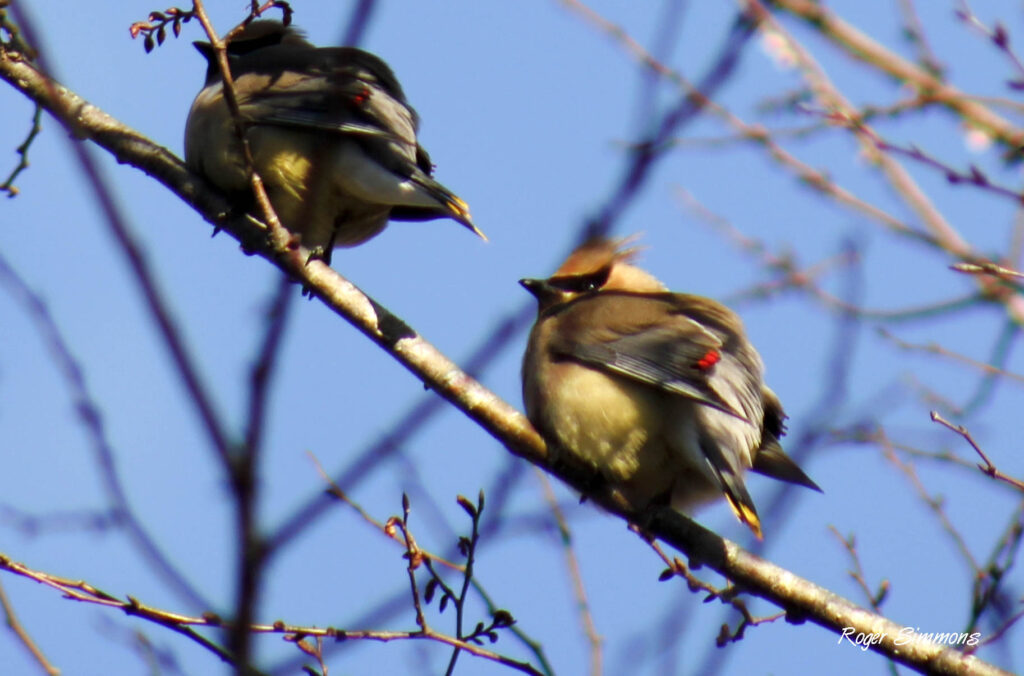
Cedar Waxwings get their name from the red tips of their feathers that look like they were dipped in wax.

Seeing a Cedar Waxwing is considered a good sign in several cultures, according to SpiritAnimalsAndSymbolism.com.

“In the Christian tradition, cedar waxwings are believed to be messengers of peace and goodwill. They often appear during turmoil or strife, reminding us to remain calm and find our inner center,” the website noted.
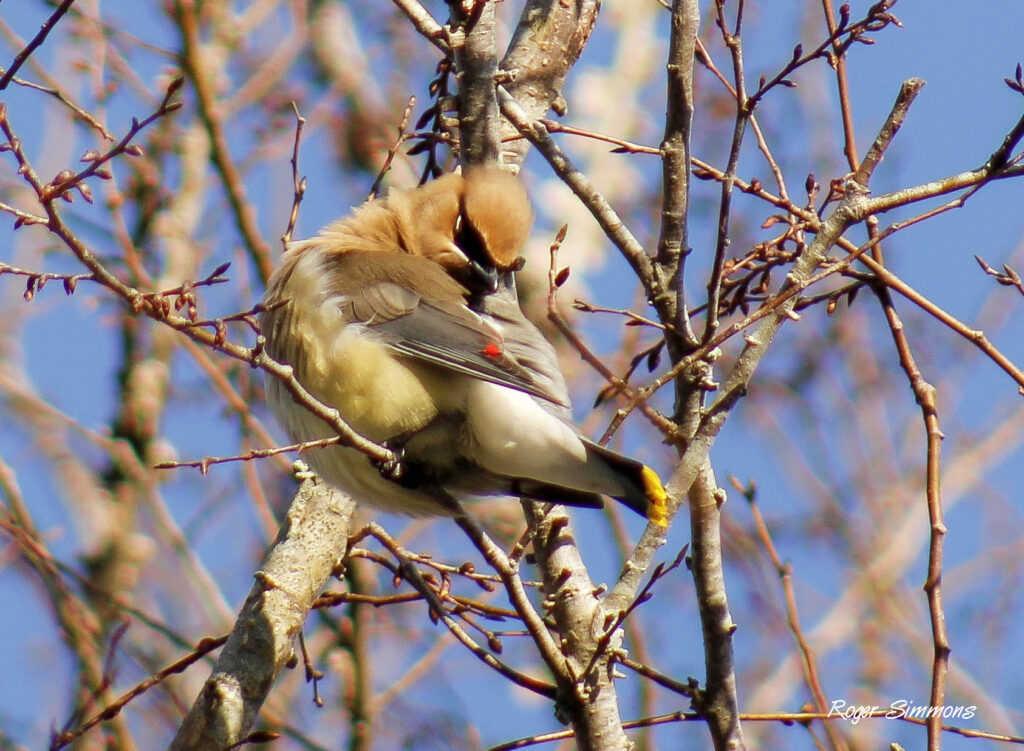
Cedar Waxwings have special places in many cultures.

“In Far Eastern cultures, the cedar waxwing is often seen as a symbol of good fortune. These birds bring luck and prosperity to those who cross their path,” the website also said.

So, since saw more than 50, do I have 50-times the usual good fortune coming?

Cedar Waxwings are know to migrate from as far away as Canada.

Share on Social Media
xfacebookredditemail
All Backyard Birds Cedar Waxwing

Post navigation

Previous post
Next post

Related Posts

All

It’s not spring, but it’s still time for baby mockingbirds

August 14, 2023August 14, 2023

It’s the middle of August and not when you would expect to see some baby birds. But I spotted one poking its head out from a large cedar shrub.

Read More
All

Different focus: White Ibis with mangrove

September 2, 2024September 2, 2024

Instead of focusing on the White Ibis in this crop, I decided to show more of the surrounding area, include the blue water and the mangrove.

Read More
All

Birds are definitely back at Black Point

December 13, 2023December 13, 2023

An early morning visit to Merritt Island delivered Roseate Spoonbills Wood Storks, Reddish Egrets, Great Herons, Osprey, Scrub-Jays and lots and lots of different ducks.

Read More

Latest Posts

  • More Mississippi Kites at Lake Apopka
  • Busy birding during slow summer season
  • Swallow-tailed Kites in Florida are a joy to watch
  • A few more birds from Fort DeSoto
  • Mississippi Kites make rare visit to Lake Apopka

Top Locations

Orlando Wetlands

Posts about visits to Orlando Wetlands


UCF Arboretum

Posts about visits to UCF Arboretum


Merritt Island

Posts about visits to Merritt Island National Wildlife Refuge


Lake Apopka

Posts about visits to Lake Apopka Wildlife Drive


Fort DeSoto

Posts about visits to Fort DeSoto Park


Galleries

Roger's Favorites

An ever-changing collection of my favorite pictures


American Flamingos

Photos of American Flamingos in Indian River


Belted Kingfishers

Photos of Belted Kingfishers across Central Florida.


Oystercatchers

Pictures of American Oystercatchers at Fort DeSoto Park


Spoonbills

Pictures of Roseate Spoonbills in Central Florida


Whooping Crane

Pictures of one of the last Whooping Cranes in Florida


MORE GALLERIES


Topics

American Flamingo American Kestrel Anhinga Bald Eagles Barn Swallow Belted Kingfisher Black-and-White Warbler Black-Crowned Night-Heron Blue-gray Gnatcatcher Caspian Tern Common Gallinule Common Yellowthroat Digital TV Eastern Bluebird Great Blue Heron Great Egret Green Heron Limpkin Little Blue Heron Northern Cardinal Northern Parula Orlando Wetlands Park Osprey Palm Warbler Prairie Warbler Purple Gallinule Red-bellied Woodpecker Red-shouldered Hawk Red-winged Blackbird Reddish Egret Roseate Spoonbill Sandhill Crane Savannah Sparrow Snail Kite Snowy Egret Tricolored Heron WESH-2 WFTV-9 White Ibis WKCF-18 WKMG-6 WOFL-35 Wood Stork WRDQ-27 Yellow-rumped Warbler

©2025 Roger Simmons | All Rights Reserved